
Floors That Handle Daily Living
Flooring Installation in Kingsport for upgrading kitchens, bathrooms, living areas, and full home updates
Worn carpet with visible traffic patterns, cracked tile grout, or outdated vinyl that curls at seams tells you that existing flooring has reached the end of its functional life and no longer contributes to home value or daily comfort. Installing new flooring transforms how rooms look and perform while addressing practical concerns like cleanability, moisture resistance, and durability under specific use patterns. Smith Construction And Home Maintenance LLC handles flooring installation in Kingsport with attention to subfloor preparation, which determines whether finished floors remain level, quiet, and stable over time or develop problems like squeaking, gaps, or premature wear.
The installation process begins with removing old flooring, inspecting the subfloor for damage or unevenness, making repairs or adding underlayment as needed, and then installing new material with proper expansion gaps, adhesive application, or fastening methods suited to the flooring type. Different materials require different approaches, as ceramic tile needs mortar and grout while laminate planks float over foam underlayment and luxury vinyl can be glued or clicked together depending on product design. Alignment matters throughout the process to prevent cumulative error that becomes visible as installations progress across large rooms.
Request a consultation to evaluate current flooring condition and discuss material options suited to your budget and room function.
Why Subfloor Condition Determines Long-Term Performance
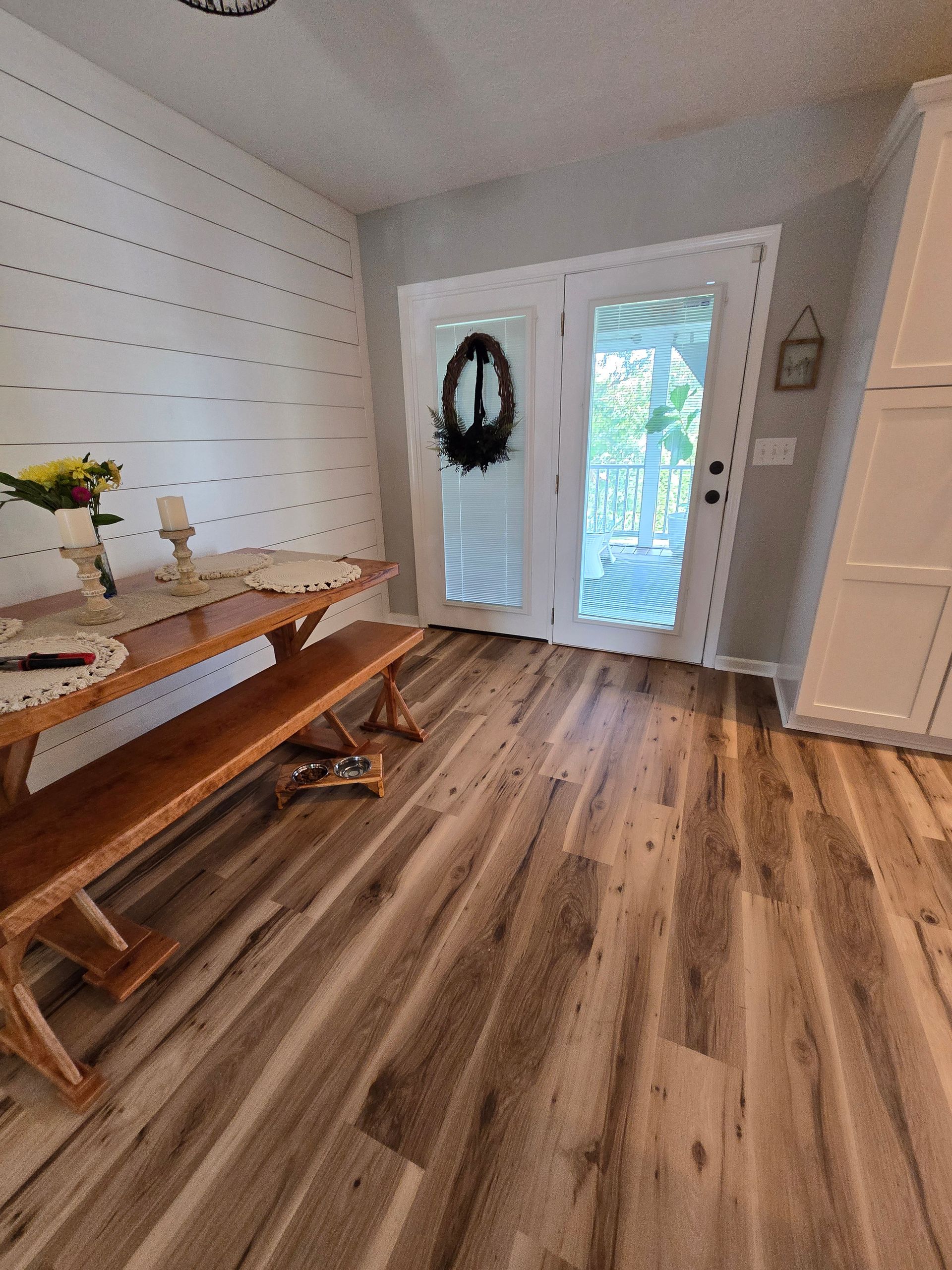
Subfloor preparation separates installations that last from those that fail prematurely, as uneven surfaces cause tile to crack, laminate to separate at joints, and vinyl to telegraph imperfections through thin wear layers. Checking for level across the installation area, securing loose sections, filling low spots, and addressing moisture issues before new flooring goes down prevents callbacks and ensures manufacturers' warranties remain valid. Skipping these steps to save time creates problems that surface within months as gaps open, edges lift, or materials begin to delaminate.
After installation completes, rooms gain updated appearance with consistent color and texture across the entire floor surface, improved functionality as materials suited to specific uses replace generic builder-grade options, and easier maintenance compared to worn flooring that traps dirt in damaged areas. Walking across finished floors reveals solid feel without hollow sounds or movement, transitions between rooms align cleanly without tripping hazards, and baseboards reinstall flush against new surfaces. These observable changes confirm that both material quality and installation technique met professional standards.
Material selection depends on factors like moisture exposure in bathrooms and kitchens, durability requirements in high-traffic hallways, aesthetic preferences for living and sleeping areas, and budget constraints that affect whether engineered wood, ceramic tile, luxury vinyl, or laminate makes the most sense. Guidance on these trade-offs helps homeowners make informed decisions rather than choosing based solely on initial cost without considering long-term performance or replacement frequency.
Questions Before Starting Your Project
Homeowners in Kingsport often need clarity on material suitability for different rooms, how subfloor issues affect installation, and what to expect during the work process.
What flooring materials work best in moisture-prone areas?
Ceramic or porcelain tile, luxury vinyl plank, and sheet vinyl all resist water damage better than laminate or traditional hardwood, making them appropriate for bathrooms, laundries, and kitchens where spills and humidity levels remain higher than in living spaces.
How is subfloor preparation handled before installation?
Preparation involves removing existing flooring down to the structural subfloor, checking for level using long straightedges, securing loose boards or plywood, filling low spots with leveling compound, and adding underlayment layers if required by the new flooring type to provide cushioning or moisture barriers.
When should flooring installation be scheduled during renovation projects?
Flooring typically happens after drywall work, painting, and major construction finish but before final trim installation when possible, allowing installers to work without navigating around baseboards and reducing the risk of damaging fresh paint with equipment or materials.
What affects the total timeline for a flooring project?
Room size, furniture removal requirements, subfloor condition, material type, and whether installations involve multiple rooms or full home updates all influence duration, with most single-room projects completing within one to two days once materials arrive and spaces are cleared.
How do different flooring types compare for long-term durability?
Ceramic tile lasts decades but can crack under impact, engineered wood handles moisture better than solid hardwood but shows wear in high-traffic zones, luxury vinyl resists scratches and water but can dent under heavy furniture, and laminate offers budget-friendly aesthetics with moderate lifespan before needing replacement.
Smith Construction And Home Maintenance LLC provides material recommendations based on room-specific conditions and homeowner priorities. Reach out to discuss flooring options and receive a project estimate tailored to your home's layout and current floor condition.